
Distinguished scholar, writer, and artist, Johanna Drucker recently shared her insights with me on designing effective humanities communication to engage undergraduate and high school students.
Our conversation began with Drucker’s thought-provoking articulation of a central challenge facing humanities communicators: “We must shift from speaking about the humanities to enabling students to speak for and through them.”
Drucker has seen traditional humcomm methods all too often fail to captivate students’ imaginations and their evolving sense of identity, resulting in a disconnect between the subject matter and their lived experiences.
The solution? “Find a point of entry,” she said, “one that fosters identification and imagination, prompting young people to actively inhabit scenarios, ask questions, and solve problems.”
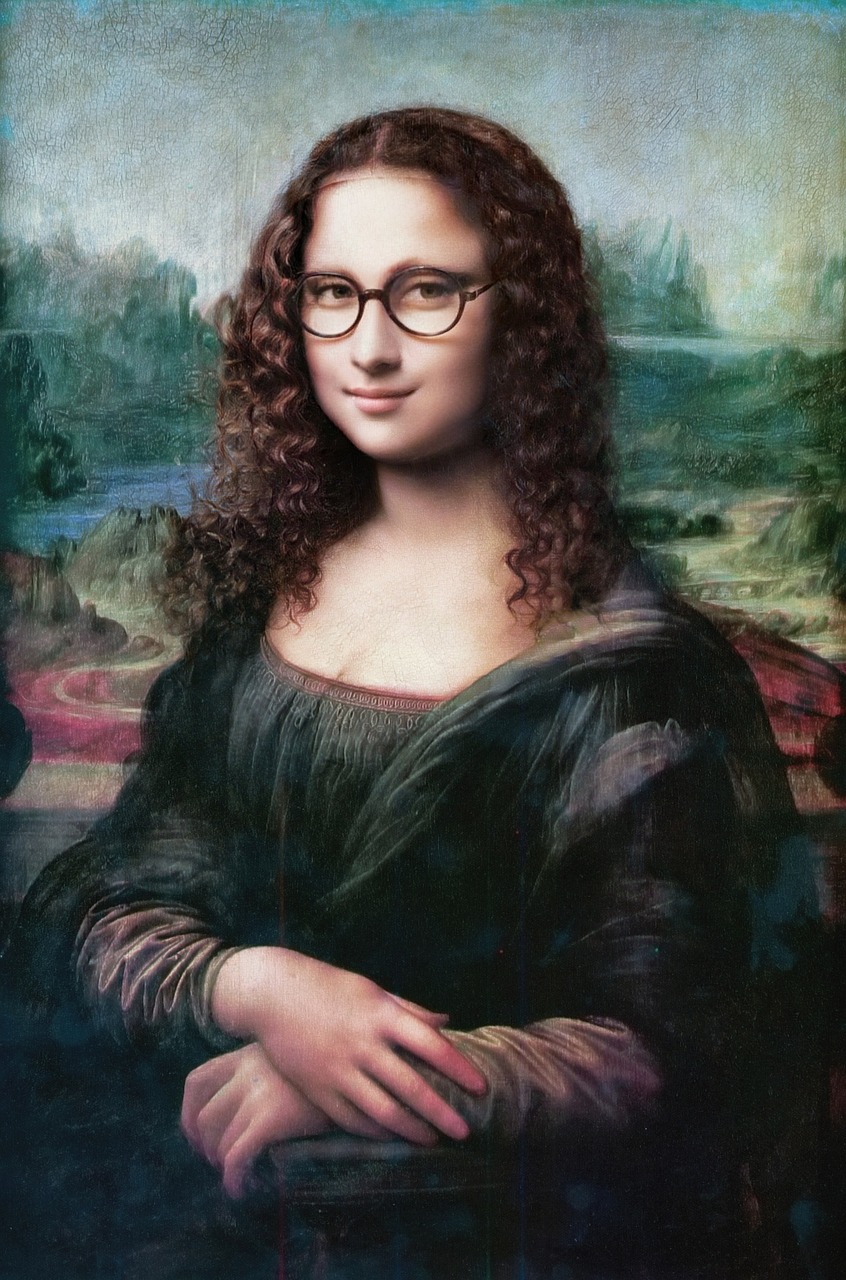
This strategy informs Drucker’s teaching practice. Visiting the Metropolitan Museum of Art with her UCLA students, instead of employing a conventional lecture format to discuss the artworks—an approach she characterized as often eliciting disengagement (“they couldn’t care less”)—she invited students to connect with the art through the following prompt: “Imagine that your parents are willing to pay for any artist to render your portrait. But for them to do so, you have to tell your parents which artists you are choosing and why.”
This prompt, as she calls such provocations, effectively personalized students’ relationship to the history of art surrounding them on all four walls, spurring them to eagerly analyze artistic styles, periods, clothes, objects in ways that revealed their own reflection in the artistic portraits.
Drucker further argued that moving beyond a rhetoric of “crisis” in the humanities requires focusing on making the humanities relevant and rewarding. She suggested humanists tap into contemporary forms of storytelling and content creation, such as short-form writing, episodic narratives, and influencer posts in ways that ignites students’ imaginations. This involves creating prompts that home in on students’ interests and allow them to inhabit scenarios they can make their own. “Imagine becoming the character of a Shakespeare drama,” Drucker prompts by way of example. “What would your life be like? What clothes would you wear? What does your home look like? Now jump one hundred years into the future. How has your life changed?”.
To expand students’ understanding of the value of the humanities, Drucker maintains, educators must acknowledge and build upon students’ inherent desire to tell stories they can identify with and to understand how knowledge, history, and culture shape those narratives.
“We must shift from speaking about the humanities to enabling students to speak for and through them.”
This approach transcends disciplinary boundaries, holding particular relevance for students in fields such as engineering and computer science, who, Drucker explains, can be engaged in digital humanities projects that combine imagination and world building. Students can be tasked to research and interview the needs, cultural backgrounds, and beliefs of the communities they wish to reach and serve, and integrate those findings in their field-specific projects.
Drucker’s innovative teaching methodologies can bring such approaches to life. Other teaching approaches she suggests can promote the practice of close reading across platforms, typefaces, and visual storytelling practices. For instance, she asks students to create diary entries as historical figures or reimagine film scenes across time, or redraw a page of The Wall Street Journal as a page from National Enquirer, and vice versa. By doing so, students learn how visual information design shapes messaging, identity, and history.
It boils down to this, Drucker concludes: humanities communicators need to find the right “point of entry”. And these points of entry need to include the following three elements:
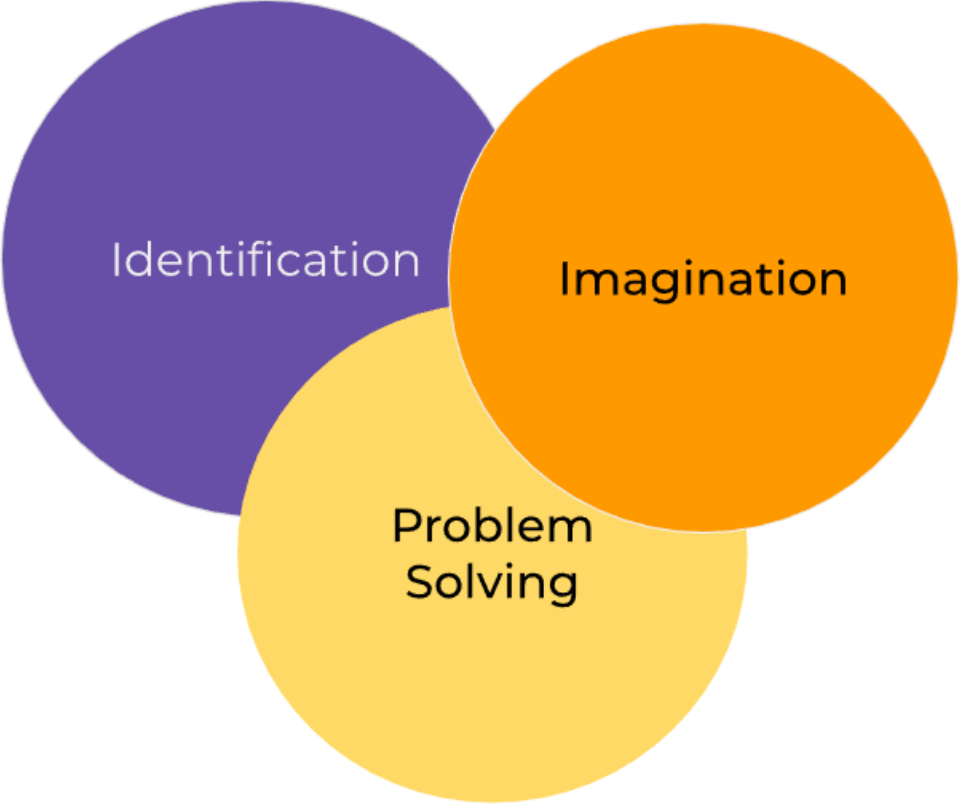
- Identification (connecting with young people’s own identity, and making them feel that everyone can connect, be seen, and feel included)
- Imagination (encouraging students to use creativity to place themselves into different frameworks)
- Problem Solving (creating curiosity and motivation to arrive at a goal)
Johanna’s Prompt Template
- Pick a specific topic–well-defined, lined to individual objects, events, or materials.
- Assign a role that is individuated with which to identify.
- Create a problem to solve that requires research in pursuit or analysis.
- Propose an outcome or result that has a vivid story to tell in an individual voice.
- Encourage assessment by the group by designing affirmative rubrics. What works in each instance?
Johanna Drucker

Johanna Drucker is Distinguished Professor and Breslauer Professor Emerita, Department of Information Studies at UCLA. She is internationally known for her work in the history of graphic design, typography, experimental poetry, fine art, and digital humanities as well as for her artist’s books and experimental typography.
Her most recent book, Inventing the Alphabet, was published by University of Chicago Press in 2022. Other new titles include Visualization and Interpretation (MIT Press, 2020), and Iliazd: Meta-Biography of a Modernist (Johns Hopkins University Press 2020), with Introduction to Digital Humanities (Routledge Spring, 2021), and The JAB Anthology, with Brad Freeman (University of Iowa Press, 2023).
Drucker’ artist‘s books were the subject of a travelling retrospective, Druckworks: 40 years of Books and Projects, in 2012-2014
Honors and Awards: 2023 elected to the American Philosophical Society; 2021 received the Steven Heller Award for Cultural Criticism from the AIGA (American Institute of Graphic Art); 2019 given the Alexandra Garrett Award for Service, Beyond Baroque Literary Center, Los Angeles, CA; 2019 invited to be the Inaugural Distinguished Senior Beinecke Fellow in the Humanities; 2016 awarded an Honorary PhD in Fine Arts from the Maryland Institute College of Art, Baltimore, MD; 2015 received the Walter Ong Award for Scholarship from the Media Ecology Association; 2014 she was elected to the American Academy of Arts and Sciences; in recognized with the 2014 Oscar Lewis Award, The Book Club of California (for work in book arts); and in 2010 APHA (American Printing History Association) bestowed the Individual Achievement Award for contributions to the field.
A collection of her essays, What Is? (Cuneiform Press) was published in 2013 and Graphesis: Visual Forms of Knowledge Production (Harvard University Press) appeared in 2014. Digital_Humanities, with Anne Burdick, Peter Lunenfeld, Todd Presner, and Jeffrey Schnapp, (MIT Press) was published in 2012.
Other work includes Diagrammatic Writing (Onomatopée, 2014), Fabulas Feminae (Litmus Press, 2015), The General Theory of Social Relativity, (The Elephants, 2018), Downdrift: An Eco-fiction (Three Rooms Press, 2018), and Off-World Fairy Tales, with Susan Bee (Litmus Press, 2020).