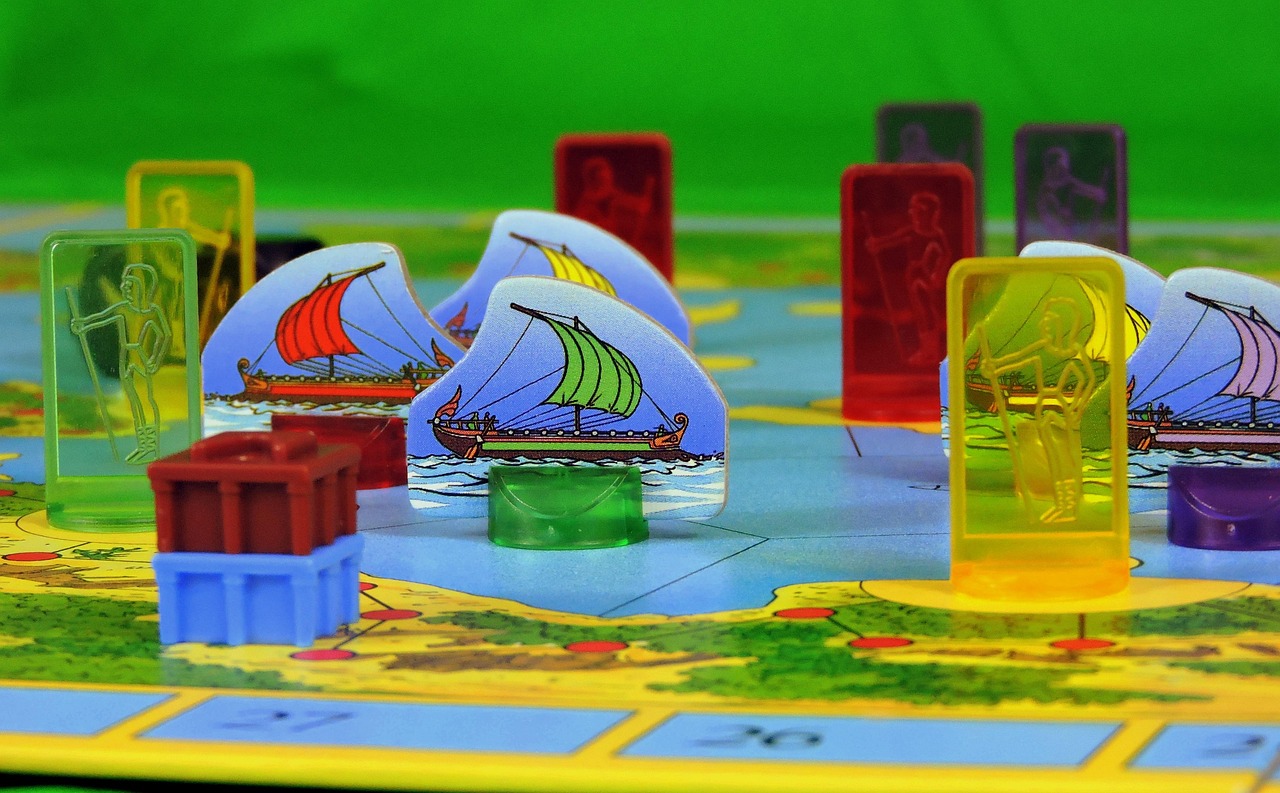
André, whose distinguished career focused on tangible global impact, noted that bridging the gap between theoretical understanding and practical implementation often presents the biggest hurdle in communicating the humanities’ relevance. As such, he emphasized the need for a real back-and-forth, moving beyond passive information delivery. Think gamification and immersive environments. These could serve as proving grounds for applied humanities – a space where research transitions to real-world application.

Engagement is the crucial link to demonstrating the vital role of the #Humanities to students and parents, according to retired U.S. diplomat André Goodfriend. I had the pleasure of speaking with André on April 14th, 2025 in an effort to map high school and college student engagement with the humanities across the U.S. This insightful exchange, also drawing from Goodfriend’s expertise expressed in “Diplomacy as Entrepreneurial Humanities” (featured in Entrepreneurial Humanities), sparked exciting ideas for moving beyond passive information delivery towards active participation.
He highlighted a promising trend of games and academic projects drawing inspiration from humanities themes. Titles like Disco Elysium, Heaven’s Vault, Walden, a Game, and Never Alone thoughtfully engage with themes such as identity, memory, moral complexity, and cultural tradition. Similarly, VR-based empathy exercises and narrative-rich experiences have demonstrated potential in eliciting emotional and ethical reflection.
However, André astutely observed that these experiences often fall short of explicitly illustrating how the humanities directly inform action in the non-virtual world. While they raise intriguing questions and present compelling themes, few clearly demonstrate how a humanities foundation guides decision-making, fosters reconciliation, or assists communities in navigating tangible challenges.
This same observation extends to the metaverse and other digital spaces, said André. While there’s significant interest in virtual diplomacy, collaboration, and dialogue, concrete examples of humanities disciplines actively framing ethical, historical, or cultural approaches to real-world issues–such as recidivism in Central Europe, divided spaces in Cyprus, or political polarization in the U.S.–remain scarce.Despite this gap, promising initiatives exist. Institutions like the University of Arizona’s Center for Digital Humanities, Stanford’s Virtual Human Interaction Lab, and the World Economic Forum’s Global Collaboration Village are moving in promising directions. Yet, their work often remains in the research or prototype stages, lacking strong connections to policymaking or practical implementation.
The primary challenge ahead is not awareness, but application. How do we create environments—physical or virtual—where the humanities are not merely background elements, but actively shape outcomes?
André underscored the immense potential of digital humanities for fostering sustained engagement. Building on the immersive model of Amar Bakshi’s “Portals” [whose fascinating story is included in the Extraordinary Partnerships book] for real-time intercultural encounters, he proposed creating dynamic digital “libraries.” Unlike fleeting portal experiences, these spaces would allow students to leave comments and participate in ongoing discussions, promoting deeper self-reflection on the value of a humanities degree – a crucial element for cultivating lasting understanding.
The challenge then becomes: how do we brainstorm shared, playful experiences for kids and parents that not only illuminate the value of humanities in daily life but also emphasize clearer pathways connecting this understanding to future educational and professional choices?
Consider, he suggested, a “Where’s Wally?” style activity: “Where’s the Humanities in [X] environment?” This simple yet effective approach could encourage students to actively identify the critical thinking, empathy, and communication skills inherent in everyday scenarios, prompting them to recognize the humanities’ existing relevance.

Encouragingly, he said, prominent leaders across diverse sectors are increasingly recognizing the inherent value of a humanities education. Dara Khosrowshahi, CEO of Uber, recently emphasized that studying both engineering and liberal arts in college was an “absolute necessity” for leadership. Steve Jobs also famously stated, “It’s in Apple’s DNA that technology alone is not enough—it’s technology married with liberal arts, married with the humanities, that yields us the results that make our hearts sing.” Additionally, platforms like LinkedIn Learning highlight empathy, communication, and critical thinking—all core humanities skills—as top assets in today’s job market. Yet, discussions persist, such as those on Reddit, questioning the practicality of humanities degrees in the job market.
Crucially, said André, in the realm of artificial intelligence, some of the most critical conversations now revolve around human-centric issues. Bias, explainability, and ethical design require the context-driven thinking that the humanities uniquely provide.
All of this suggests that the primary challenge ahead is not awareness, but application. How do we create environments—physical or virtual—where the humanities are not merely background elements, but actively shape outcomes? Where historical memory, ethical reasoning, and cultural fluency are foundational in addressing shared problems?
André offered several compelling ideas worth exploring further:
- Partner with Career Services and Industry: Collaborate with career counselors and organizations to better articulate and demonstrate the value of humanities degrees in the evolving workplace, drawing on both industry leader insights and successful university programs.
- Prototype more Humanities-Centric Games: Building on Kathleen Kuo’s innovative “Humanities at Play” program at Nevada Humanities, we could prototype more humanities-centric games. Imagine a compelling sci-fi narrative, as André explored in a recent conversation with a friend, in which a godlike AI must help a clan rebuild civilization by selecting a mix of historical figures, foods, and animals. The process of inclusion, diversity, and ethical dilemmas embedded in this design could vividly demonstrate how humanistic reasoning—concerning justice, collective memory, pluralism, and meaning—is not just decorative, but central.
- Design Spaces for Real-World Divisions: Explore the potential of a virtual environment designed to bring together divided communities—such as those in Cyprus—could have significant impact. Similar opportunities exist in the U.S. and elsewhere to use immersive platforms for bridging societal divides and facilitating genuine dialogue.
Perhaps our starting point should be, he suggested, to establish a comprehensive baseline: mapping where and how humanities outreach to students in K-12 and in college are currently integrated into universities, councils, media, games, and the metaverse. Such a mapping would provide a clearer picture of the current landscape and inform strategies to advance this vital conversation.
André’s call for a comprehensive mapping initiative resonates deeply with the work that the CHC is currently undertaking through its recent Mellon grant. Before we can effectively advocate for and integrate the humanities, we need a clear understanding of the existing ecosystem. By collectively identifying current integrations and gaps across various sectors, we can build a data-driven foundation for strategic action and a more impactful conversation. What are your thoughts on engaging the next generation of students? What games and immersive or interactive engagements already exist? What should we focus our initial mapping efforts?
André Goodfriend
M. André Goodfriend retired from the U.S. Department of State in 2022 as a member of the Senior Foreign Service, holding the rank of Minister-Counselor, after a diplomatic career spanning more than three decades. His overseas assignments included adjudicating visa applications in India, safeguarding the welfare of U.S. citizens in the UK, countering organized crime and visa fraud in Russia, providing political analysis in Israel, advising consular officers at small U.S. embassies across Africa, leading the Consular Section in Syria, and heading the U.S. embassy in Hungary. In Washington, D.C., he worked on conflict prevention strategies and the implementation of new information technologies to facilitate diplomacy.
With one side of his family immigrating to the U.S. as Greek-speaking British subjects from Cyprus in the 1920s and the other as Polish citizen, Jewish refugees from France after World War II, Mr. Goodfriend has a deep interest in intercultural competence and identity. Born in California and raised in Arizona, he earned Bachelor’s degrees in Philosophy, Classical Greek, French, and Radio-Television from the University of Arizona. He then pursued a Master’s in Communication at the Hebrew University of Jerusalem, followed by doctoral research at the City of London Polytechnic on governmental use of new media.
He currently consults with the University of Arizona on intercultural communication and the humanities as an applied field of study.